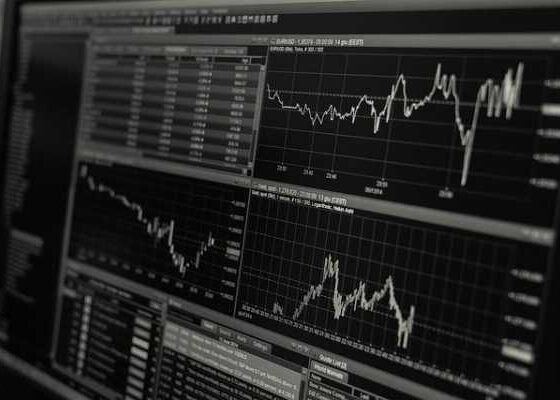

Let’s be honest: there’s something deeply comforting about watching an economy expert on TV confidently explain exactly what’s going to happen next. Inflation will cool.Rates will hold. The market will do a little dance, then calm down. It sounds so… precise.
But here’s the dirty little secret hiding behind all those charts and jargon: a lot of it is educated guessing. Very smart, very well-researched guessing – but guessing nonetheless. Economies are messy, humans are weirdand the global financial system has approximately nine million moving parts, most of which seem to change their minds on a Tuesday.
That’s not to say economists are clueless. They’re not. They’re brilliant pattern-spotters, model-buildersand professional uncertainty-managers. The problem is that we keep asking them to do something the data can’t realy support: predict the future with confidence. And when the forecast changes, we act shocked – as if the weather app didn’t just promise sunshine and then hand us a thunderstorm.
So let’s pull back the curtain on why every economy expert is secretly guessing – and why that might actually be the most honest thing about the whole profession.
The Confidence Trick Behind Every Economic Forecast
Here’s the dirty little secret: those confident numbers you see on the evening news are less about crystal-ball gazing and more about covering their backs. Forecasters dress up guesswork in fancy models and then add a thick layer of certainty to sell it. Notice how they never say “maybe” or “we’re not sure”? Rather, you get:
- Precise ranges that sound scientific but are basically dart throws.
- Revision after revision – because being wrong quietly is better than being vague loudly.
- Confidence intervals that are really just “we have no clue” in a suit.
It’s a performance. The trick is making you forget that economies are chaotic,human,and full of surprises.
So next time an expert tells you with absolute certainty where the economy is headed, remember this: they’re guessing, just like the rest of us – only with better PowerPoint slides. The confidence is the product, not the accuracy.
- They cherry-pick data that fits the narrative.
- They hide behind jargon like “ceteris paribus” (translation: “if nothing else changes, which it always does”).
- They never apologize for the misses that vanish from the headlines.
The real forecast? A coin flip would be more honestand at least you’d know it’s random.

Why the Data Lags and the Models Cannot Keep Up
Here’s the awkward truth: by the time a number lands in a tidy dashboard, the economy has already moved the furniture and repainted the walls. Data is a rearview mirror with a cracked lensand the models built on top of it keep arriving at the party fashionably late.
- Survey lag: People answer questions about last month’s mood while this month’s budget is already screaming.
- Revision roulette: the first estimate looks confident, then gets quietly rewritten like a group chat message.
- Average blindness: A national number can look calm while entire neighborhoods, industriesand side hustles are living a different story.
Models don’t fail because math is useless. They fail as reality keeps changing the rules mid-game – supply chains sneeze, consumer habits swerveand “normal” packs its bags without leaving a forwarding address. So the forecast looks sharp, the spreadsheet feels officialand everyone nods politely while secretly hoping the next data drop makes sense of the last one.
| Signal | Real-World Lag | Model Reaction |
|---|---|---|
| Hiring freezes | Shows up months later | “Looks fine!” |
| Grocery prices | Hits budgets first | “Temporary blip.” |
| Small-business stress | Hidden in averages | “Data pending.” |
The Hidden Assumptions That Quietly Break Predictions
Every forecast looks sharp in a headline, but it’s usually standing on quiet little guesses that never make the slide. Economists assume shoppers stay sensible, trends keep rollingand the data tells a clean story-until a meme, a port delayor a weird spending spike reminds everyone that the model is basically a weather app with a tie on.
- “People act like spreadsheets” – until panic, vibesor a viral deal scrambles demand.
- “Today’s trend keeps going” – right up until the line bends,breaks,or moonwalks.
- “The data means what the label says” – even when it missed side hustles, cash tipsand group chats.
Those guesses don’t just add flavor-they
How to Pressure Test any Economic Prediction You Hear
Before you let a forecast live rent-free in your brain, make it show its work. Ask for the base case, the time horizonand the exact number that would prove the prediction wrong – vague vibes don’t count. Then poke the incentives: who benefits if you believe this? What would change their mind? A solid prediction survives a few uncomfortable questions; a shaky one starts sweating immediately.
- Baseline check: What’s the “nothing weird happens” version?
- Falsifiability test: What data would make you say “I was wrong”?
- Incentive sniff test: Is the forecaster selling a newsletter, a fundor a headline?
- Track record scan: Have they made this call before – and updated it?
Now translate the prediction into a small, boring checklist. If the expert says “inflation will fall,” write down by when, by how muchand which measure.If they say “the market will rally,” ask which market, over what windowand compared to what. That’s how you separate a useful forecast from a fortune cookie with a chart.
| Prediction | Ask this | Red flag |
|---|---|---|
| “Rates will fall” | Which rate? When? | No timestamp |
| “Recession is coming” | Which indicator? How deep? | “Trust me” logic |
| “Stocks will boom” | Which index? Vs. what? | Perma-bull with no stop |
What to Do When the Experts Are Just Guessing
First,stop treating a confident forecast like a receipt. Separate the signal from the performance by asking what data they’re using, what would prove them wrongand weather their track record survives outside a slide deck. Then run your own tiny stress test:
- Check the assumptions – especially the invisible ones about wages, oilor consumer mood.
- Look for the get-out clause – phrases like “could,” “may,” and “barring shocks” are not accidental.
- Size your bet – if the forecast is fuzzy, keep your financial moves flexible.
second, turn their guess into your decision filter. Use a simple “if/then” plan: if inflation cools, you do one thing; if hiring stalls, you do another. Don’t wait for a perfect prediction-build small options and revisit them often. Here’s a speedy cheat sheet:
| expert claim | Better question | Your move |
|---|---|---|
| “Rates will fall.” | Whenand by how much? | Keep refinancing options open. |
| “Recession is coming.” | What would make you wrong? | Build a cash buffer,not panic. |
| “Markets will rally.” | Who benefits from this call? | Diversify and ignore the noise. |
Q&A
Why Every Economy Expert Is Secretly Guessing – A No-BS Q&A
Q: Wait, are you saying economists have no idea what they’re doing?
A: Not exactly. They’ve got data, models, historyand some useful tools. But economies are messy, moving targets full of humans doing weird human stuff. So “guessing” here means informed guessing-with error bars that are often way bigger than headlines admit.
Q: Then why does it feel like they’re “secretly” guessing?
A: Because certainty sells. Media wants clean predictions. Politicians want confidence.Nuance gets cut. Good experts say “likely,” “range,” and “depends.” Bad coverage turns that into “Economist says X WILL happen.”
Q: Why are economic forecasts wrong so often?
A: Human behavior changes, shocks happen-pandemics, wars, rate hikes, supply chain chaos-and data gets revised later. Models also simplify reality by necessity. Plus,forecasts can change behavior,which changes the forecast. It’s a giant feedback loop.
Q: Is economics just astrology with spreadsheets?
A: No. It has real insights and real methods. But it’s not physics. You can’t put the global economy in a lab and run controlled experiments. think weather forecast, not moon landing.
Q: Should I just ignore experts then?
A: Ignore certainty,not expertise. A good expert gives scenarios,probabilities,assumptions,and what would change their mind.A bad one gives a single number and a smug face.
Q: How do experts get away with being wrong?
A: Frequently enough they don’t-you just don’t hear about it. Predictions fade, revisions happen quietlyand confident takes get more airtime than “Yeah, I was way off.” Hindsight also makes old forecasts look dumber than they seemed at the time.
Q: What should I look for in an economic prediction?
A: Assumptions,time horizon,uncertainty ranges,and incentives. Ask: What has to be true for this to work? What’s the track record? Is this analysisor vibes with a chart?
Q: So is the whole economy just vibes?
A: Not vibes-imperfect data plus human behavior.The economy is a giant adaptive system. Experts can spot patterns,but nobody has a cheat code.
Q: What’s the one-sentence takeaway?
A: Economists aren’t clueless-they’re navigating a chaotic systemand the honest ones are basically professional guessers with footnotes. Trust expertise carefully, demand uncertaintyand don’t confuse confidence with accuracy.
Concluding remarks
So next time you see an economist on TV delivering a forecast with the confidence of someone who’s never been wrong in their life, just remember: underneath the charts, the jargonand the very serious glasses, there’s probably a whole lot of educated guessing going on. And honestly? That’s fine. The economy is messy,people are unpredictable,and nobody has the cheat codes.
The trick isn’t finding an expert who’s never wrong-it’s finding one who knows they might be. So stay curious, keep a healthy dose of skepticism handyand don’t let anyone sell you certainty in a world that runs on “probably.” If nothing else, you can now nod along knowingly the next time someone says, “Well, the economists predict…” and quietly think, “Sure they do.”