
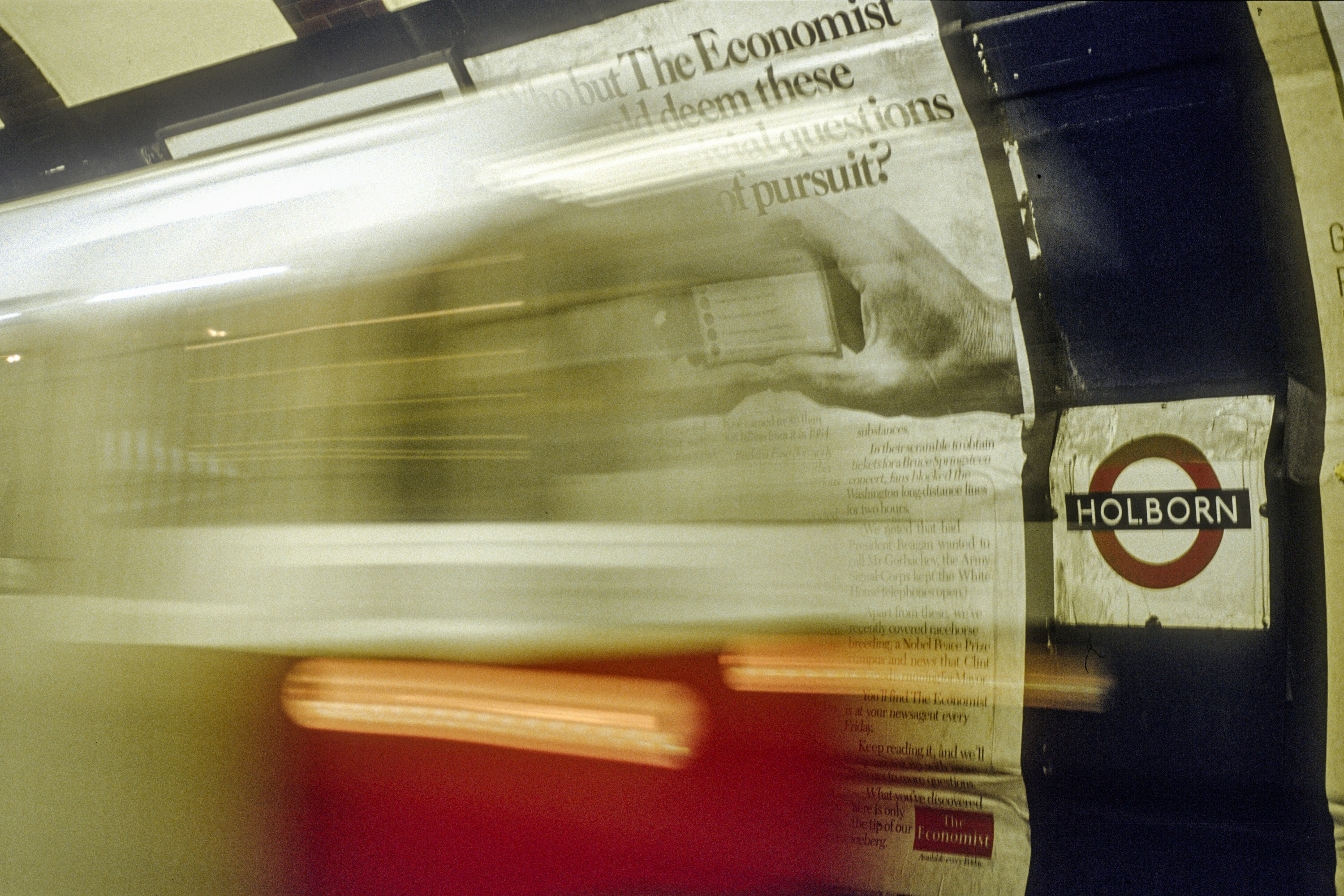
Let’s be honest: there’s something weirdly satisfying about watching an economy expert get it wrong.One minute thay’re on TV confidently explaining exactly what’s going to happenand the next minute the markets do the financial equivalent of a raccoon knocking over a trash can. suddenly everyone’s a criticand the comment sections are on fire.
But here’s the thing: every economy expert gets it wrong sometimes. Not as they’re secretly clueless (well, not always), but because economies are messy, humanand stubbornly resistant to tidy little formulas. Experts work with models, dataand probabilities-not crystal balls. And when you throw in politics, global shocks, weird consumer moodsand the occasional once-in-a-generation crisis, even the smartest forecast can faceplant.
In this article,we’re going to look at why economic experts miss the mark,what those misses actually mean,and why “the expert was wrong” is a lot more elaborate-and more useful-than it sounds. because understanding why forecasts fail might teach us more about the economy than any perfectly confident prediction ever could.
Your Forecast Looks Clever Until Reality Files a complaint
Economists are not wizards in lab coats; they are people building polite guesses from imperfect data, then dressing those guesses in a nice spreadsheet.The spreadsheet can look gorgeous: clean lines, confident percentages, maybe a trend arrow pointing up and to the right. Then a port backs up, a harvest disappoints, a central bank blinksand suddenly the elegant chart looks like it was drawn by someone who has never met a grocery bill. The smart move is not pretending surprises don’t happen-it’s forecasting with room for them: use ranges, stress-test the assumptionsand keep a Plan B near the coffee mug. Even the best model is a weather vane, not a fortune teller.
- Assumptions age fast – yesterday’s normal can become today’s plot twist.
- Data lags – by the time the dashboard updates, reality has already left the group chat.
- Humans are weird – panic, hypeand vibes don’t fit neatly into equations.
smarter forecasting is less about being right on the first try and more about noticing quickly when the world files a complaint. Update the story when the evidence changes, ask what would have to be true for the forecast to failand leave a little humility beside the keyboard. The goal isn’t a crystal ball; it’s a useful map that admits where the roads might be washed out.
| The Forecast | Reality’s Note | lesson |
|---|---|---|
| GDP grows 2.1% | Supply chain sneezes | Models hate sneezes |
| Inflation cools | Rent says hi | Check the boring stuff |
| Confidence up | Paycheck says nope | confidence isn’t cash |

Overconfidence Is the Quiet Bug Inside Every Economic Model
Picture an economist staring at a spotless spreadsheet like it’s a crystal ball. The math can be gorgeous, the assumptions can be tidyand the forecast can still miss the mark because real economies are full of delayed reactions, messy humansand feedback loops that don’t RSVP. Models are maps, not terrain. Trouble starts when a useful simplification gets promoted to absolute truth and everyone forgets to ask what the map is leaving out.
- Clean data, dirty reality: numbers can look precise while the story behind them is chaos.
- Elegant assumptions: “rational actors” is a handy fiction, not a global law.
- Forecast swagger: a single number sounds smarter than an honest range, but it usually isn’t.
The smarter move is to treat every model like a smoke alarm, not a fortune teller: useful when it screeches, useless if you ignore the burnt toast. Poke the assumptions,publish the uncertainty range,and keep asking “what would prove us wrong?” that tiny habit turns economic expertise from a confidence parade into an actual learning machine.
| Model says | Reality whispers | Smarter move | ||||||||||||||||||||||||||||||
|---|---|---|---|---|---|---|---|---|---|---|---|---|---|---|---|---|---|---|---|---|---|---|---|---|---|---|---|---|---|---|---|---|
| “Exactly 2.4%” | “Somewhere around 1-4%” | Show a range | ||||||||||||||||||||||||||||||
| “People act rationally” | “People panic-buy cereal” | Stress-test weirdness | ||||||||||||||||||||||||||||||
| “This time is diffrent” | “History cleared its throat” | Check the old scars |

| Theory | Real-World Data | verdict |
|---|---|---|
| Smooth inflation curve | Weird grocery receipts | Curve loses |
| Perfect labor model | 3 side hustles + 1 burnout | Model sweats |
| Clean demand line | Panic buying | Line zigzags |
Groupthink Makes Bad Calls Feel Like Team Spirit
When a room full of economists starts nodding in unison, that’s not always a sign of brilliant consensus-it’s often the smell of a bad call marinating in its own juices.Social pressure quietly rewrites doubt as disloyalty. Before you know it,the loudest voice becomes the group’s memory,and everyone else starts gaslighting themselves into agreement. Watch for these red flags:
- Questions get treated like personal attacks
- Option data is dismissed as “noise”
- Everyone remembers the same “obvious” conclusion that nobody actually tested
That warm fuzzy feeling of being on the same page? It can be a trap. Team spirit celebrates harmony; groupthink punishes friction. The difference matters when millions of dollars-or entire economies-are riding on a forecast that everyone secretly doubts but nobody says out loud. Here’s a fast gut check:
| Feels like team spirit | Actually groupthink |
|---|---|
| Fast agreement | No one remembers why |
| Shared confidence | Shared blind spots |
| Loyalty to the plan | Loyalty over evidence |
If your expert circle never has a designated skeptic,you’re not a team-you’re an echo chamber with a spreadsheet.
Run a Humility Check Before You Trust the Numbers
Numbers love to show up wearing a fancy suit. A forecast can look sharp, a chart can feel authoritativeand a spreadsheet can practically dare you to argue. Before you hand over your trust, make the math answer a few pesky questions:
- Who built this? Every model carries the blind spots of its maker.
- What’s missing? Silence in the data is often the loudest clue.
- What would change my mind? If nothing would, that’s not confidence-it’s a red flag.
Even a clean-looking table can be a tiny drama queen. A quick gut-check works better than blind faith, especially when the numbers are waving a shiny headline in your face.
| Question to ask | Why It Matters |
|---|---|
| Who made it? | Models inherit their maker’s bias. |
| How big is the sample? | tiny samples tell tall tales. |
| What’s assumed? | Assumptions hide in fine print. |
| What would flip the story? | If nothing would, be suspicious. |
Q&A
Q&A: Why Every Economy expert Gets It Wrong sometimes
Q: So what’s the article really saying?
A: Basically, that economists aren’t fortune tellers. They’re working with messy data, unpredictable humansand a global economy that changes faster than anyone can model perfectly. They’re smart – but they’re not psychic.
Q: Wait, so are economy experts just guessing?
A: Not exactly. It’s more like forecasting the weather a year out. They’ve got tools, dataand experience, but there are way too many moving parts to get it right every time. Good experts know their predictions come with error bars.
Q: Why do they miss big stuff like recessions or inflation spikes?
A: Because economies are complex systems. Data gets revised, shocks come out of nowhereand people don’t always behave the way models expect. A pandemic, a war, a bank runor a weird meme-stock moment can throw the whole thing off.
Q: But shouldn’t experts know better by now?
A: They do know better – that’s why many of them talk in probabilities and scenarios, not guarantees. The problem is that headlines love a bold predictionand bold predictions are usually wrong at least sometimes.
Q: Is there a bias problem too?
A: Yep. Experts are human. They can be influenced by their institutions, politics, fundingor just the fact that everyone around them is thinking the same way. Groupthink is realand it can make a whole room of smart people miss the obvious.
Q: So should I just ignore economic experts?
A: No – that’s the overcorrection. You shouldn’t worship them or ignore them. Use them like a GPS: helpful, but you still need to watch the road. Look for experts who explain their uncertainty and update their views when facts change.
Q: How can I spot a bad economic prediction?
A: Big red flags: no timeframe, no uncertainty, zero caveatsand a ton of confidence. If someone says “this will definitely happen” about the economy, hold your wallet and maybe your laughter.
Q: What’s the takeaway for regular people?
A: don’t expect perfect forecasts. Expect useful context. Follow experts who show their work,admit mistakes,and give you a range of possibilities instead of one shiny answer. The economy is messy – good advice should sound a little messy too.
wrapping Up
So, there you have it. The next time you see a guru on TV predicting the next big crash or boom with absolute certainty, take it with a grain of salt-or maybe a whole shaker. They’re not wizards, just people trying to make sense of a wildly complex world, same as the rest of us. The economy is a messy, human, unpredictable beastand that’s exactly what makes it so fascinating. The best we can do is stay curious,question everything,and remember that a little humility goes a long way-especially when it comes to crystal balls. Now, go forth and be a slightly more skeptical, but no less eager, observer of the financial circus. Cheers!

You May Also Like
Why Every Economy Expert Is Your New Best Friend in 2024
10 Easy Economy Tips to Boost Your Budget Today
What an Economy Expert Really Thinks About Today’s Market

Smart Money Moves: Easy Economy Tips You’ll Actually Use
Economy 101: Easy Guide for Newbies to Get Started

Financial Resilience: Building a Strong Foundation for Long-Term Economic Stability
Maximizing Your Income: Smart Tactics for Increasing Your Financial Security

Staying Afloat: Proven Strategies for Weathering Economic Downturns
Input your search keywords and press Enter.